
How to Build a Hotel Booking Website for Rental Properties

Building a professional website is no longer optional—it’s essential for any rental property or hospitality business. A well-designed, fully-functional hotel booking website helps you attract more guests, showcase your properties beautifully, and accept reservations directly without relying solely on third-party platforms.
In this complete WordPress guide, you’ll learn how to build a hotel booking website for rental properties using WordPress, with the right tools to manage availability, pricing, payments, and online reservations.
Why You Need a Website for Your Rental Property Business
A dedicated hotel or rental property website can significantly improve your business by allowing you to:
- Reach a wider audience online 24/7
- Let guests check availability and pricing without phone calls
- Showcase rooms, villas, or apartments with images and descriptions
- Increase direct bookings with persuasive content
- Offer complimentary or paid extras such as spa services, dining options, or guided tours
- Reduce reliance on OTAs and save on commission fees
Instead of explaining everything verbally, your website becomes your best salesperson.
The Most Important Part: A Hotel Booking Engine
The core of any rental property website is a hotel booking management system. This is the engine that powers reservations, availability calendars, pricing rules, and payments.
A powerful hotel booking plugin allows you to:
- Accept and confirm online reservations instantly
- Enable automatic booking confirmations
- Manage availability calendars in real time
- Display property details, rates, discounts, and surroundings
- Sync bookings across platforms to avoid overbooking
- Accept secure online payments
- Create flexible pricing and seasonal rates
The challenge is finding one plugin that does all this without relying on multiple third-party add-ons.
Best Hotel Booking Plugin for WordPress
After comparing many WordPress booking plugins, one solution consistently stands out: Hotel Booking Plugin by MotoPress.
This plugin is widely regarded as one of the most feature-rich and reliable hotel booking systems for WordPress. It supports iCal synchronization, allowing you to list properties on platforms like Airbnb and Booking.com while keeping availability synced automatically—no overbookings.
Choosing a WordPress Theme: Two Smart Options
When building a hotel booking website in WordPress, you have two main approaches.
Option 1: Separate Theme and Booking Plugin
You can choose a WordPress theme first and then add a booking plugin.
Themes like Arcadia or Mammoth are clean and visually appealing, making them suitable for hotels, resorts, hostels, and B&Bs. They allow you to display room details, amenities, and services beautifully.
However, these themes usually rely on inquiry forms rather than real-time bookings. Guests must send a request and wait for confirmation, and online payments are often unavailable without additional plugins.
Estimated cost:
- Theme: ~$125
- Booking plugin: ~$180
This setup works if you prefer manual confirmations and personal communication with guests.
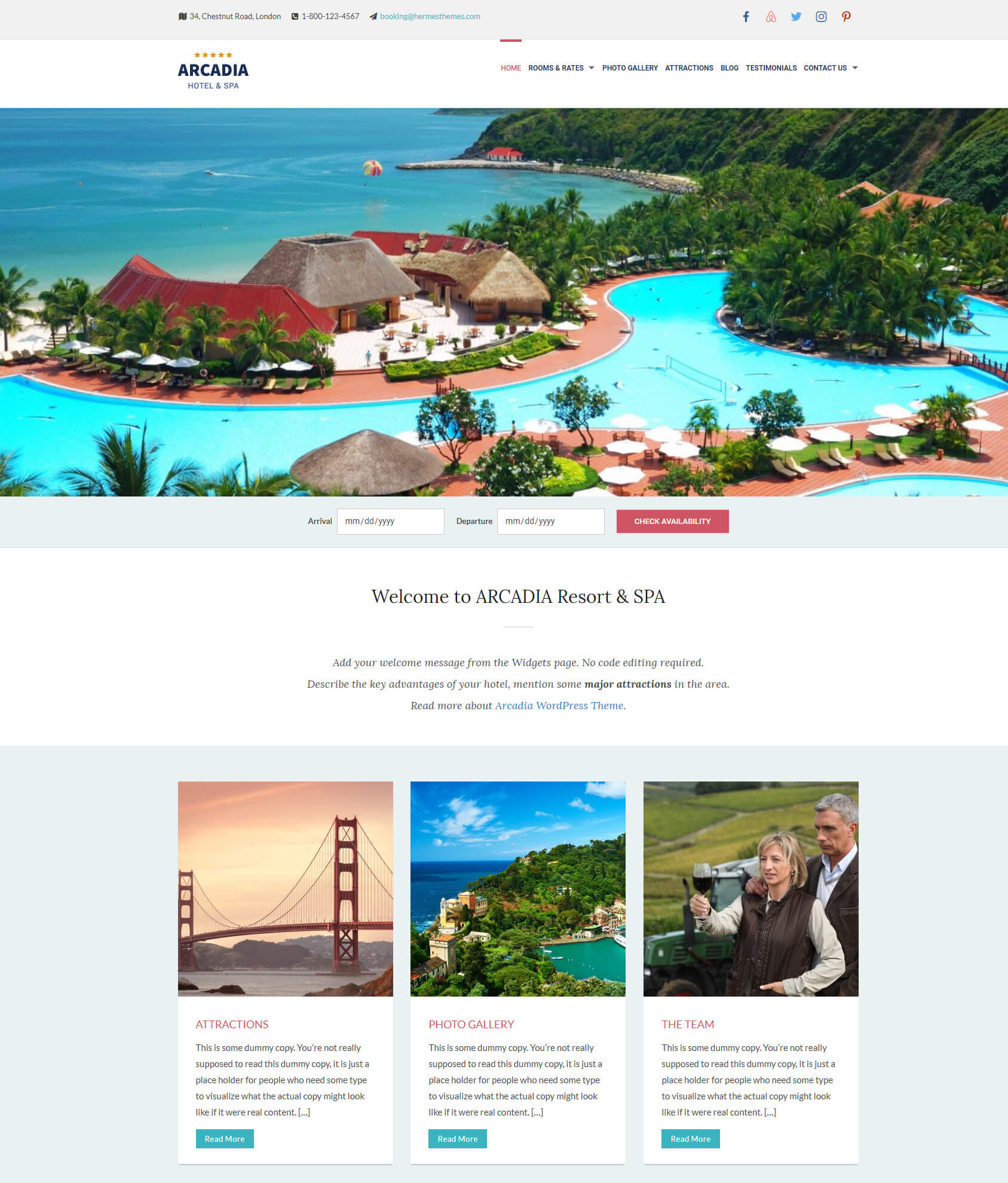
Arcadia – Hotel & Spa Theme
The Arcadia Theme is a clean, well-balanced design that works as a universal solution for any type of rental property. Whether it’s a resort, hotel, hostel, or B&B, this theme showcases your properties beautifully.
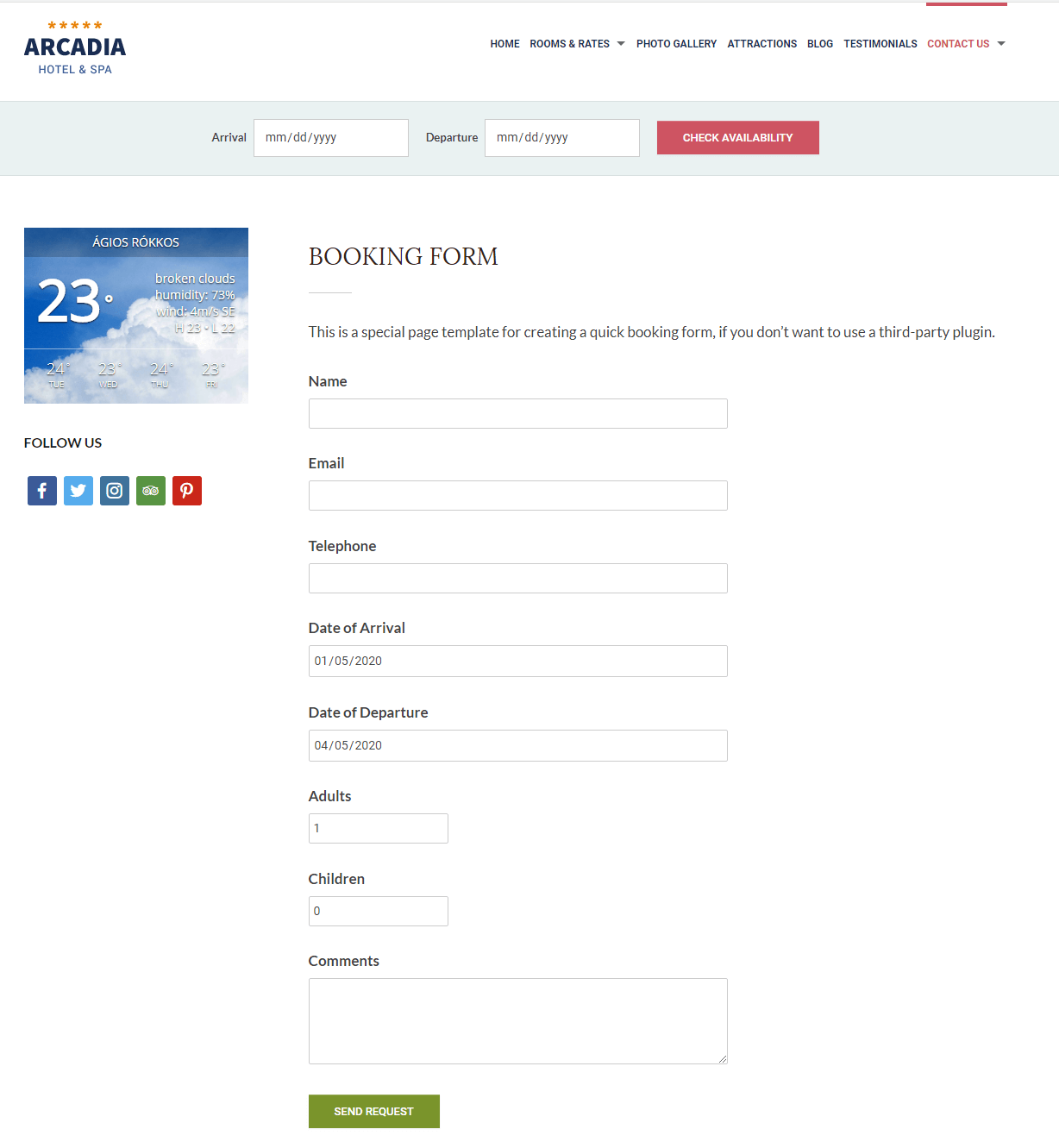
When you try to book a room, you must enter your personal information and any special requests, then wait for a confirmation. Unfortunately, online payments are not available, and the reservation is not guaranteed until you receive a reply.
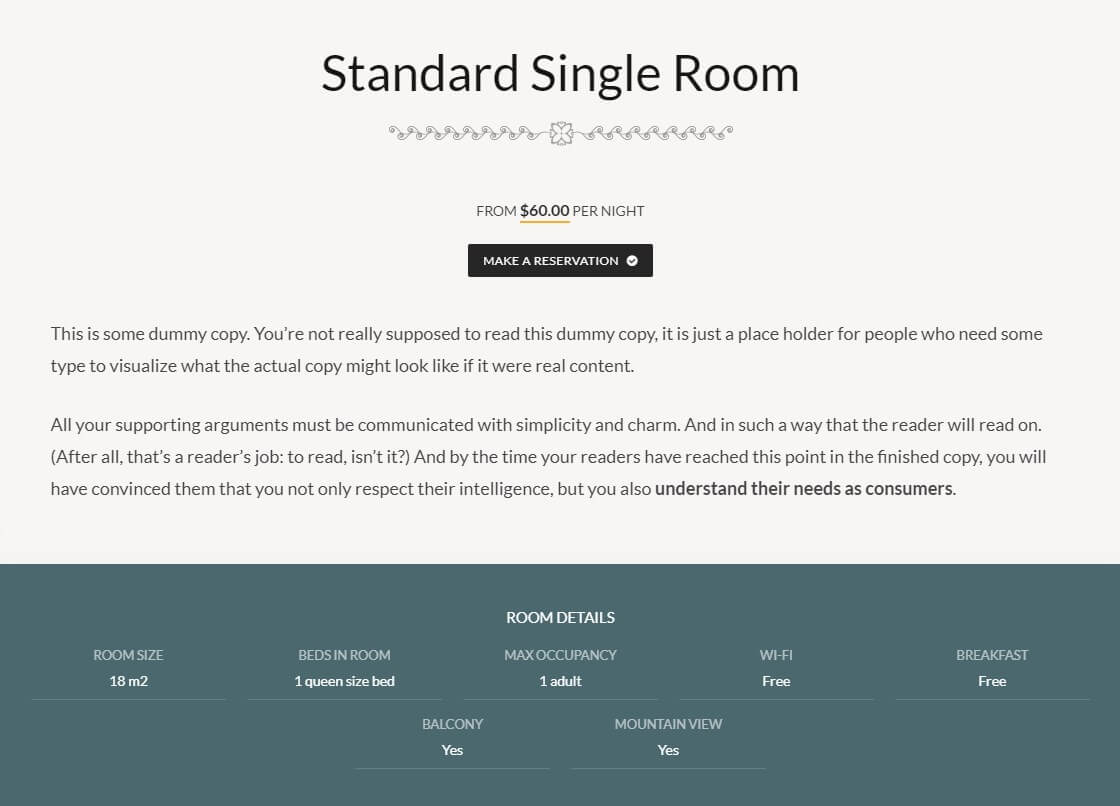
Mammoth – B&B WordPress Theme
Mammoth Theme is a great choice for displaying different accommodations, with a special section for room details. It offers a unique layout, though—it doesn’t use the typical list or grid format found in most themes.
To create a fully functional hotel booking website, you’ll need to pair these themes with a booking plugin, since guests can otherwise only submit inquiry requests.
Now, let’s look at the costs: the theme typically costs $125, while an average hotel booking plugin on the market costs around $180. That brings the total to roughly $300 for a complete website setup (excluding hosting and domain).
If this investment fits your budget, you can start to build your website without spending much time. For some purposes, not having an online payment system can even be an advantage—for example, if you want to establish personal contact with visitors before confirming bookings.
If you’d like to explore more website-building options, keep reading.
Option 2: Theme with Built-In Booking System (Recommended)
A more efficient approach is choosing a WordPress hotel theme with an integrated booking engine.
A great example is Luviana, a hotel and apartment WordPress theme that includes the MotoPress Hotel Booking plugin at no extra cost.
With this setup, guests can:
- Select dates and room types
- Choose rates and additional services
- Pay online or leave a deposit
- Receive automatic booking confirmation emails
Price: Approximately $59 for one website (plugin included).

The clean, well-organized design gives the theme a cohesive and polished look. Calm, cozy colors and harmonious layouts make it easy to add your property information and have your website ready to go.
When clients book a room, they experience all the benefits of the hotel reservation plugin. Guests can select rates, add extra services, choose a payment method, and receive a confirmation email with full booking details. You can also send emails for partial payments using the Hotel Booking Payment Request feature—making the entire process smooth and professional.
How to Build Your Hotel Booking Website Step by Step
Let’s have a closer look at all the steps of building a website that will be an identical reflection of your property!
Below is an overview of the key steps involved when using the MotoPress Hotel Booking Plugin. We’ll start from scratch, customizing the setup while providing detailed step-by-step instructions to help you build a complete booking website.
Note: The Hotel Booking plugin works with any WordPress theme, so these steps apply universally.
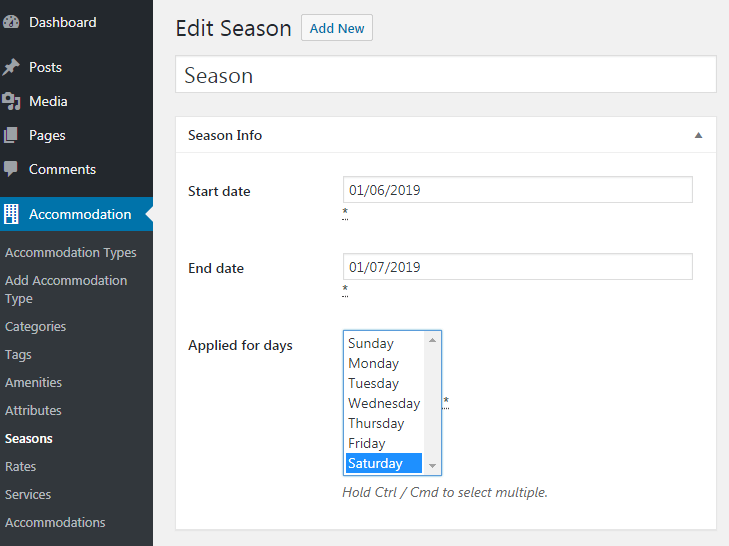
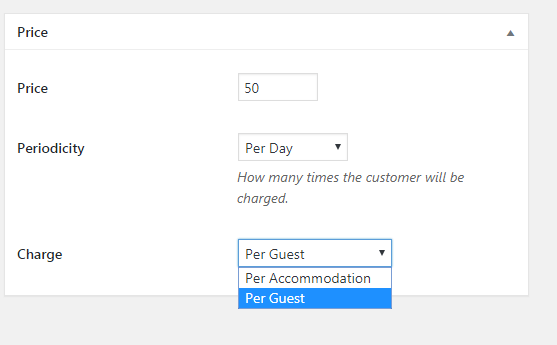
Step 1: Set Up Seasons and Room Rates
Create seasonal pricing for your accommodations:
- Go to Accommodation → Seasons
- Define seasons like Summer, Holidays, or Peak Season
- Assign different rates based on dates
You can create your custom seasons and rates depending on any time frame you find appropriate. Like mentioned above, it can be summer, holidays, New Year, Christmas, etc.
Step 2: Add Extra Services
You can upsell services such as:
- Spa treatments
- Babysitting
- Airport transfers
- Romantic dinners
Navigate to Accommodation → Services, set prices, descriptions, and display options.
Step 3: Create Accommodation Types
Add different room or property types:
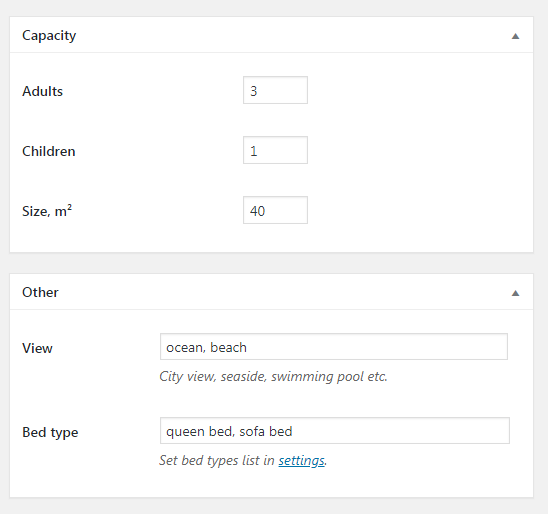
- Specify capacity (adults, children)
- Define room size, bed types, and views
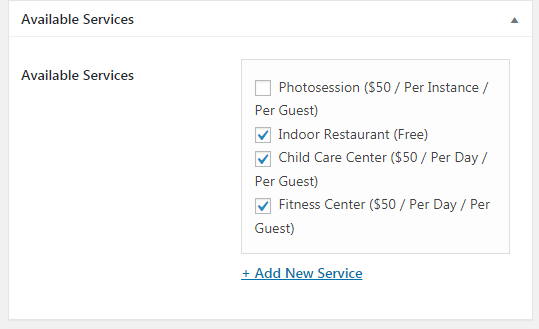
- Assign available services per accommodation
You can also create custom attributes (location, room type, view) to improve search results for guests.

Edit existing ones or create your accommodation easily in clicks.
Add the number of adults, children, accommodation size. Specify a view from the window and bed size.
You can enhance your rental accommodations by adding extra services like an indoor restaurant, a childcare center, a fitness facility, and other guest-friendly amenities.
Step 4: Enable Advanced Search
Add a booking search widget with:
- Check-in and check-out dates
- Guest numbers
- Custom attributes
This helps visitors quickly find the most suitable accommodation.
The custom attributes feature enhances your website’s search functionality, making it easier for visitors to find the exact accommodation they’re looking for.
If you go to Attributes, you can add additional info as for bookings, by specifying the location, type of room, view, etc. This creates a more advanced search for your guests and they simply choose the desired attribute and receive the most suitable result.
Create a new attribute, add it to the accommodation types, go to Appearance → Widgets, write your attribute and save the changes.

Add as many search availability fields as you wish – they are unlimited.
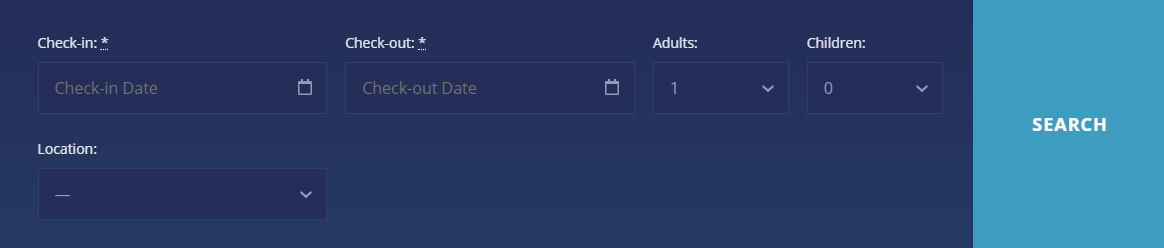
This is how the search widget will look to guests when they land on your website’s front page.
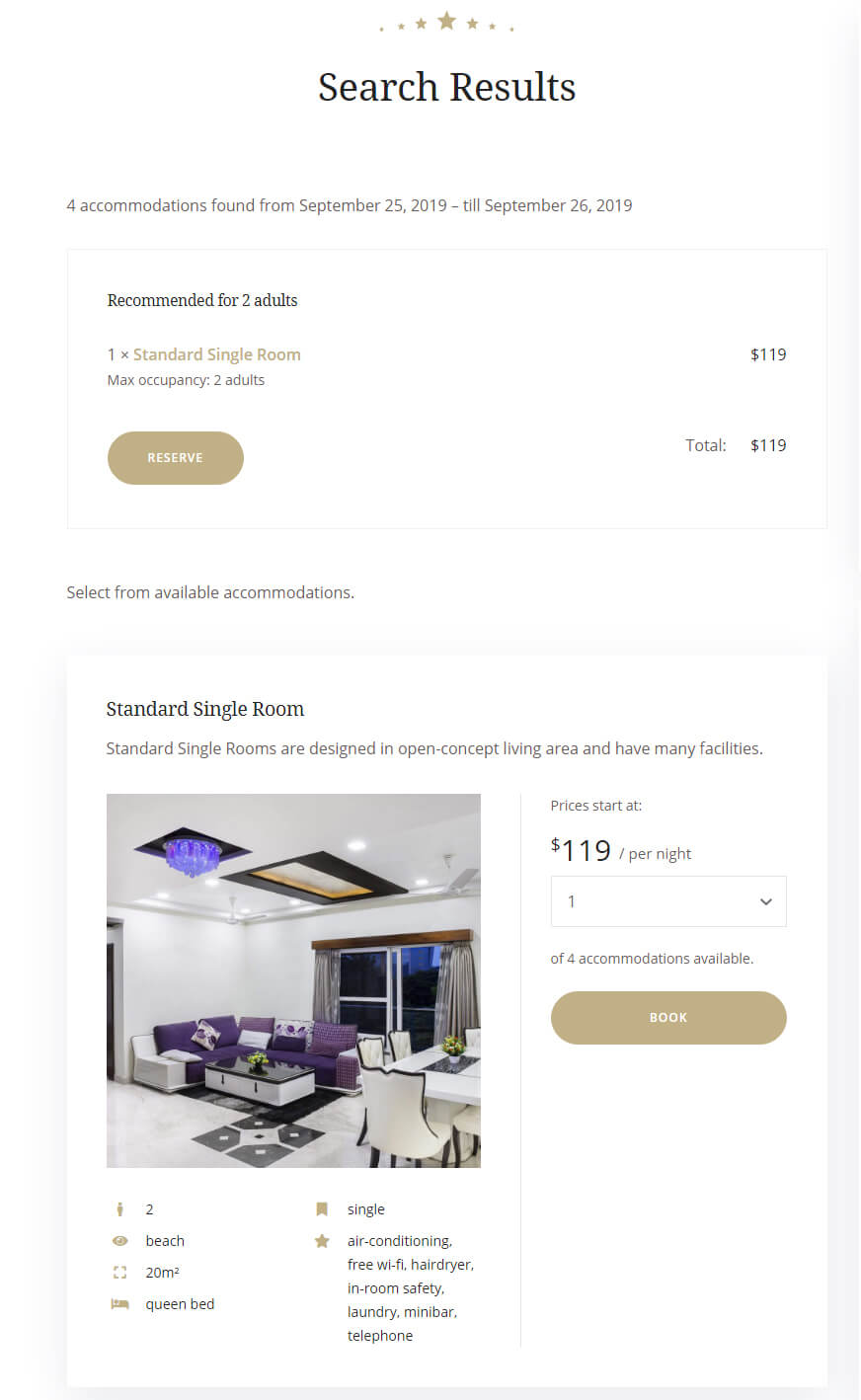
This is how the search result is shown to the visitors.
Step 5: Configure Rates and Pricing Rules
Set flexible pricing based on:
- Season
- Length of stay
- Days of the week
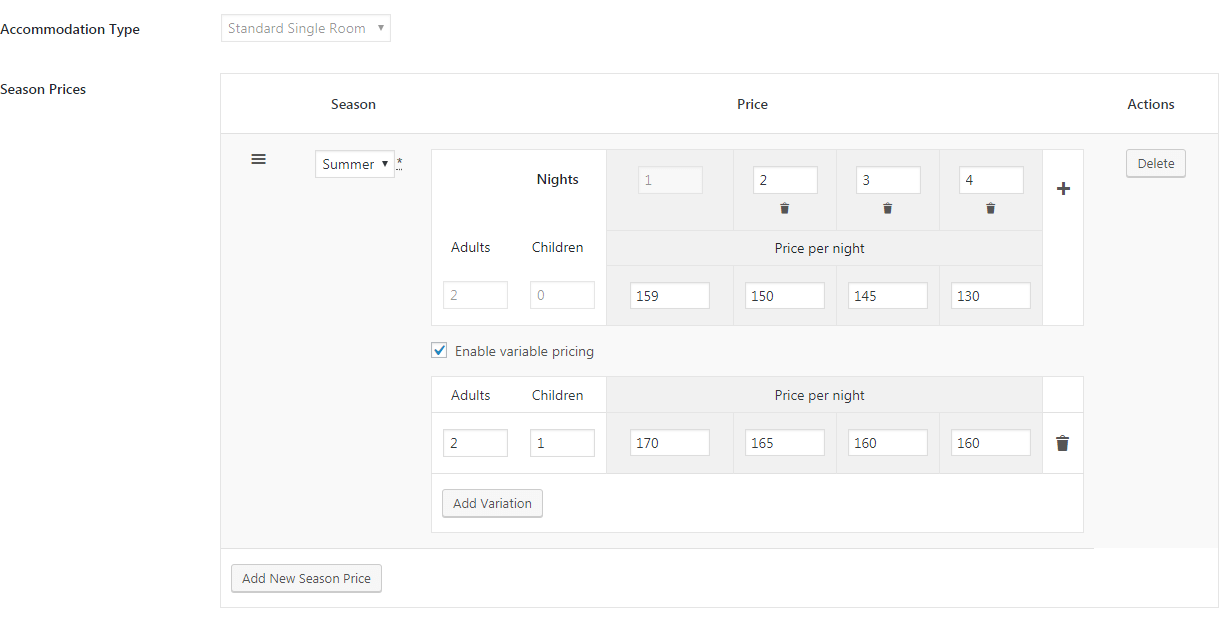
Each accommodation type has its own rate configuration, allowing complete pricing control.
To create seasonal pricing for your accommodations:
- Go to Accommodation → Rates
- Assign different rates based on dates
- Add new rate for the accommodation
Step 6: Configure Booking Settings & Emails
In Settings, you can:
- Manage booking confirmations and cancellations
- Customize admin and guest email templates
- Set currency, check-in/check-out times
- Enable coupons and discounts
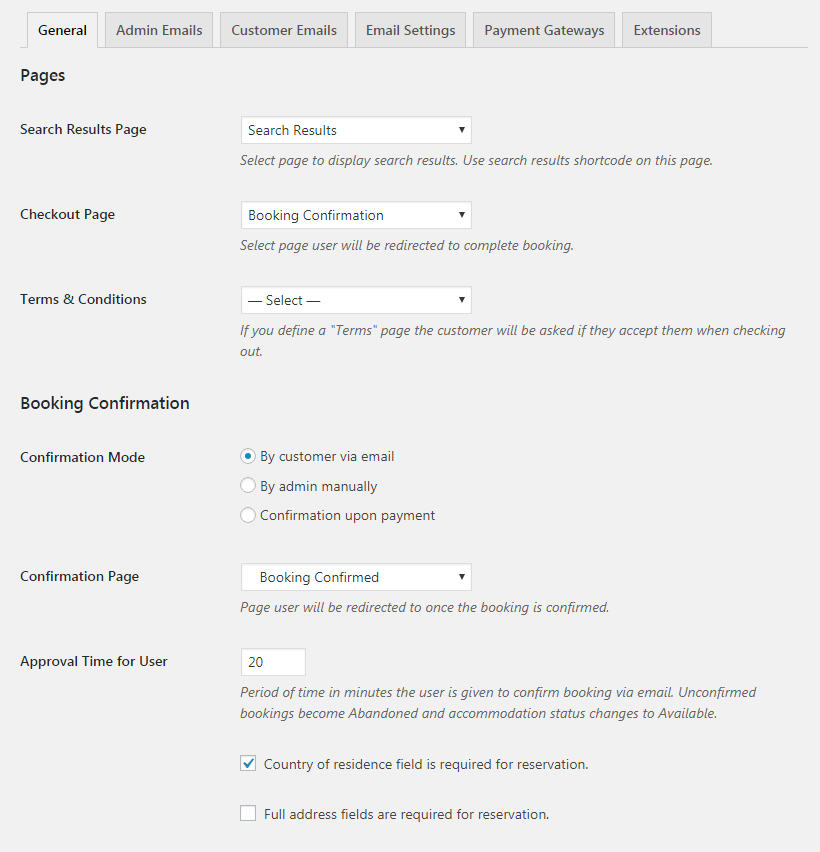
In the General tab, you can select the pages used for search results, checkout, booking confirmation, and terms & conditions.
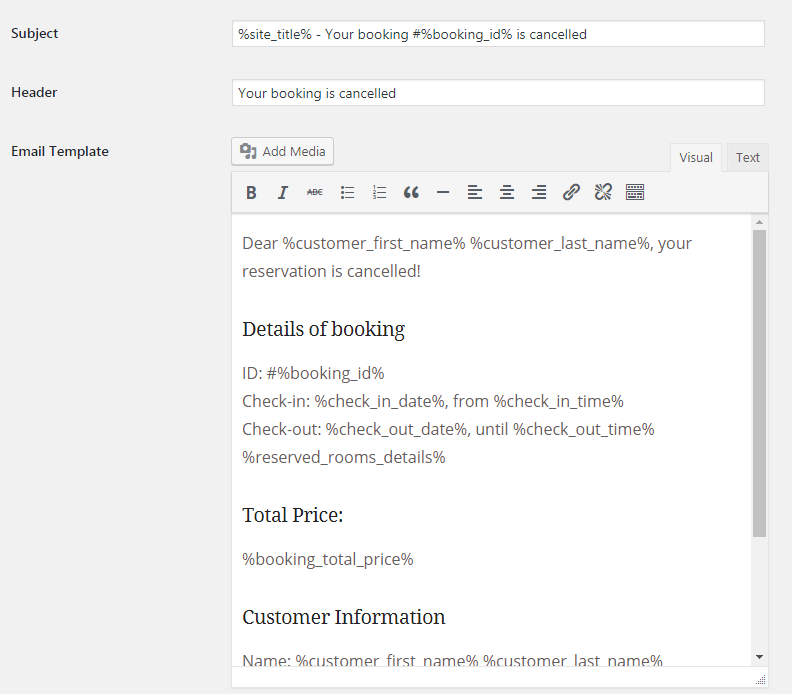
You can also customize various email templates related to bookings, such as reservation confirmations, payment notifications, and cancellation emails.
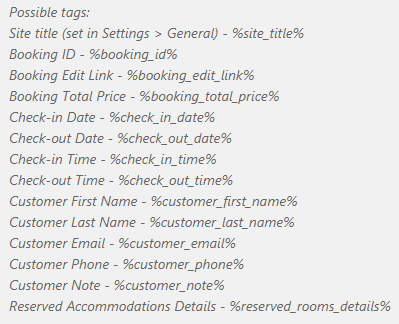
Email tags allow you to personalize booking messages and confirmations.
In the Admin and Customer Emails tabs, change the body of the letter and use any of these possible tags:
Change subject, header and add media to your letter so that it looks unique.
Step 7: Set Up Payments
The plugin supports:
- Full payments
- Deposits (partial payments)
- Pay-on-arrival options
Supported gateways include PayPal, Stripe, 2Checkout, Braintree, and more. WooCommerce integration adds even more flexibility.

If you want to give customers more ways to pay and make the booking process more comfortable, the Hotel Booking WooCommerce Payments Add-on is a great option, as it includes many additional payment gateways.
Step 8: Sync Calendars Across OTAs
Use this powerful feature to prevent overbookings for your rental properties.
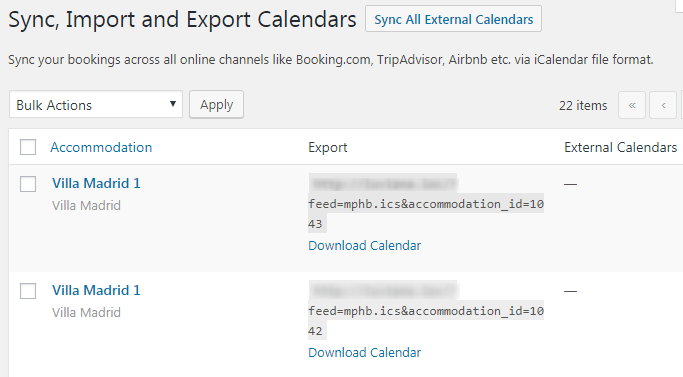
When your accommodations are listed not only on your website but also on external platforms like Airbnb and Booking.com, manually tracking reservations can quickly become difficult and error-prone. Managing availability across multiple channels increases the risk of duplicate bookings.
Calendar synchronization takes care of this automatically. Simply check whether your OTA platforms support iCalendar, copy the required link, and set how often availability should sync—starting from every 15 minutes with the latest 3.7.0 update.
Step 9: Create Coupons and Seasonal Discounts
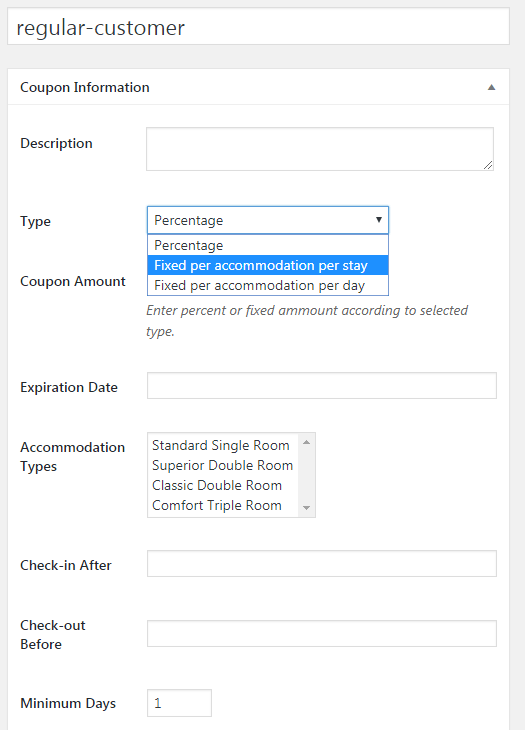
This option allows you to offer special deals and promotional campaigns to your customers. Each coupon can be configured to apply per accommodation per day or per stay.
You can:
- Offer coupons and seasonal discounts
- Set minimum and maximum stay rules
- Block specific dates or accommodations
Step 10: Add Booking Rules and Taxes
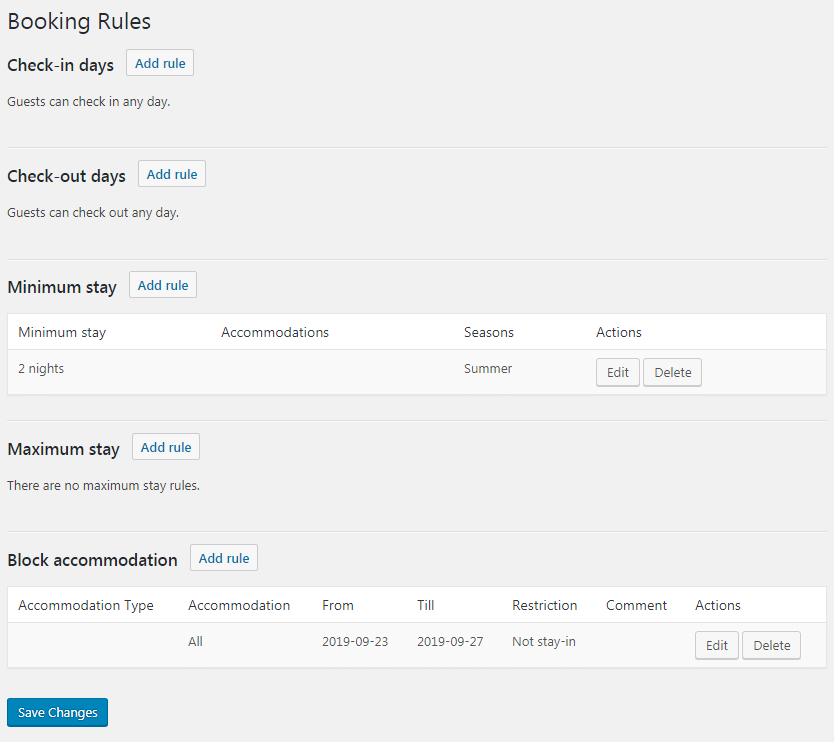
You can set booking rules like:
- minimum and maximum stay durations for different seasons
- limit bookings based on the number of guests or accommodation
You can also block certain dates so guests won’t be able to book accommodation during those periods. This is useful when the property is undergoing some kind of renovation or related work.
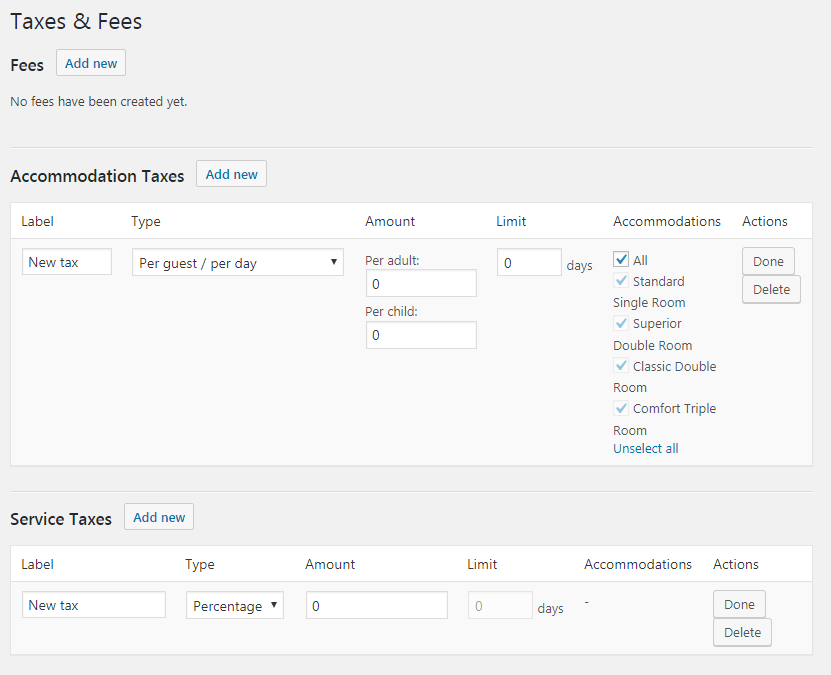
Add custom fees and taxes and manage all related details in Bookings → Taxes & Fees.
You can:
- add accommodation fees or taxes
- create service taxes
- other charges for different accommodation types
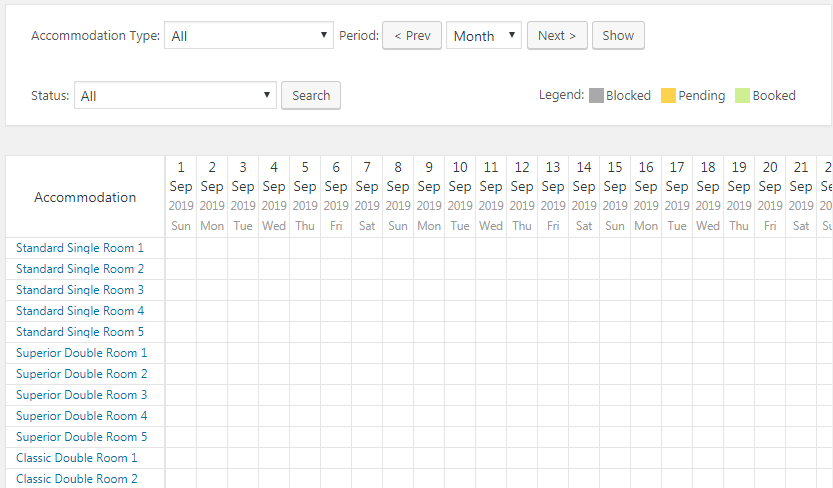
All bookings (direct and synchronized) are managed from a centralized reservation calendar. To see them, Go to Bookings → Calendar.
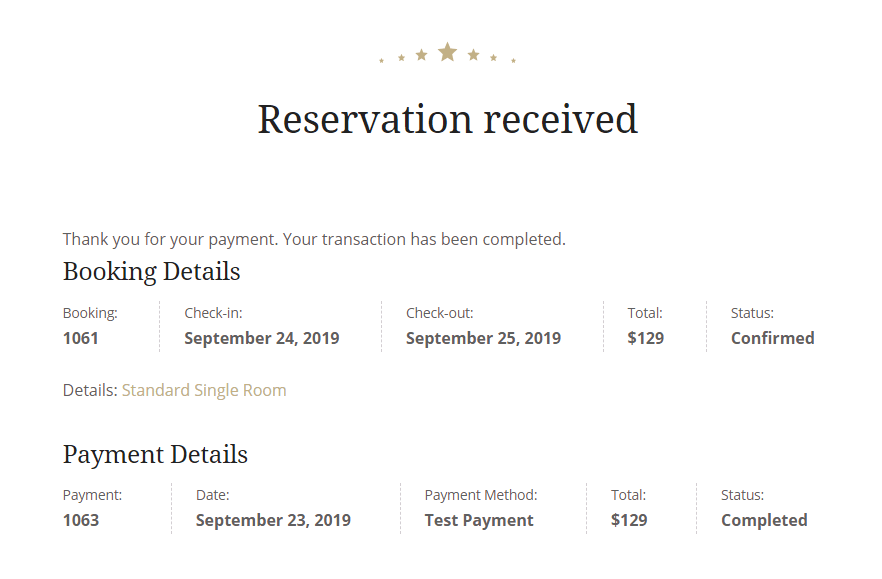
Step 11: Reservation & Payment Confirmation
As soon as the reservation and payment are confirmed, visitors are automatically redirected to a “Reservation Received” page with complete booking and payment information.
Frequently Asked Questions (FAQ)
What is the best way to build a hotel booking website in WordPress?
The easiest and most reliable way is to use WordPress with a dedicated hotel booking plugin. A solution like the MotoPress Hotel Booking plugin allows you to manage accommodations, availability, pricing, payments, and OTA synchronization from one dashboard.
Can I create a rental property booking website without coding?
Yes. WordPress hotel themes and booking plugins are designed for beginners. You can build a fully functional rental property or hotel booking website without writing any code.
Which WordPress plugin is best for hotel and rental bookings?
The MotoPress Hotel Booking plugin is one of the most popular options. It supports real-time availability, seasonal pricing, online payments, coupons, and iCal synchronization with platforms like Airbnb and Booking.com.
Can I accept online payments on my hotel booking website?
Yes. Most modern hotel booking plugins support full payments, deposits, and pay-on-arrival options. Payment gateways often include PayPal, Stripe, 2Checkout, and more.
How do I avoid double bookings on my rental property website?
You can prevent double bookings by enabling calendar synchronization (iCal). This automatically syncs availability between your WordPress website and OTAs such as Airbnb and Booking.com.
Is WordPress suitable for small hotels and vacation rentals?
Absolutely. WordPress is ideal for small hotels, guest houses, B&Bs, apartments, and vacation rentals because it is affordable, scalable, and easy to manage.
Final Thoughts
By following this guide, you can build a fully functional hotel booking website for rental properties in WordPress without custom development.
With the right combination of a responsive theme and a powerful hotel booking plugin, you’ll get:
- Professional design
- Online reservations and payments
- Smart availability management
- Scalable features for business growth
Want to see the plugin in action? Explore the Hotel Booking plugin demo to experience its features firsthand. Let us know if it meets your expectations or feel free to ask any questions in the comments section.
Disclaimer: This post may include affiliate links. If you click one of them, we may receive a small commission at no extra cost to you. Thank you for your support.